After months of considering ERP options and deciding between cloud and on-site deployments, you’re now diving into exploring different ERP systems. This stage is both exciting and important because you’ll spend significant time understanding features and pricing models.
As you research, you’ll notice many ERP solutions are designed to serve multiple industries. But are these generic systems truly suited for knitwear manufacturing? Usually, they fall short. Why is that?
In this blog, we’ll explore the common gaps in generic ERP and explain what makes an ERP system the right fit for the knitwear industry.
First, let’s understand exactly what a generic ERP is.
What is a generic ERP system?
A generic ERP system is a software solution designed to support a broad range of industries. It typically includes core modules such as finance, human resources, procurement, and basic inventory — all in one centralized platform. While flexible to some degree, these systems require extensive customization to suit specialized sectors, which can quickly become costly and time-consuming.
More than 80% of small and mid-sized businesses with under $50 million revenue use ERP systems to run their operations efficiently (Source: Market.us Scoop). However, just using any ERP doesn’t guarantee success in specialized industries like knitwear.
10 Reasons Generic ERPs aren’t Suitable for the Knitwear Industry
Here are the top ten reasons generic ERP systems fall short for the knitwear manufacturing and production industry.
1. Lack of industry-specific features
Imagine relying on your ERP to accurately calculate knitting production without understanding yarn counts or gauges. Generic systems simply aren’t built to handle knitwear production nuances like GSM (grams per square meter), loop length, or seasonal design cadences. You end up juggling spreadsheets or external apps just to keep operations moving, defeating the purpose of an ERP in the first place.
2. Inability to handle multi-stage production processes
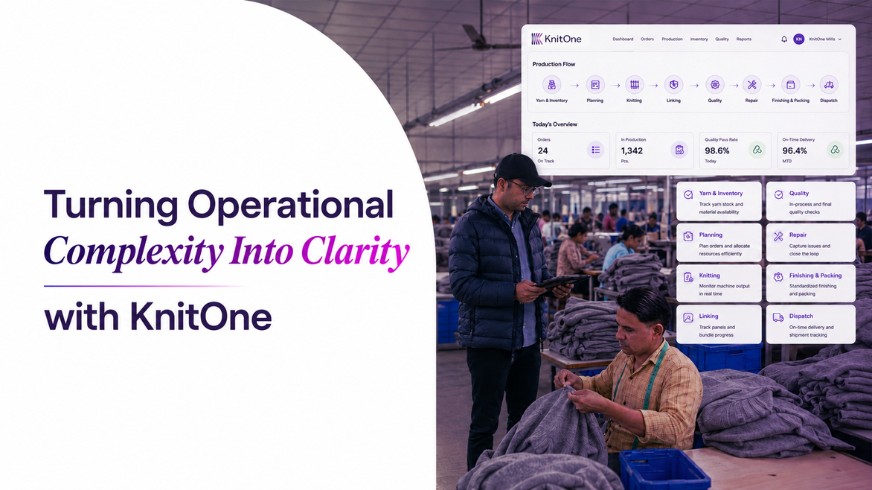
Knitwear production flows through stages like yarn dyeing, knitting, linking, washing, and finishing — each one linked to the next. But generic ERPs see it as a simple linear process. Without capturing these connections, your operations become scattered, leading to delays and confusion.
3. Rigid systems unsuited for custom, seasonal, and small batch orders
Knitwear manufacturing requires handling batches of different sizes, colors, and designs that change every season. But generic ERPs are built for large, uniform production runs. So, when buyers request quick style updates or limited editions, these systems struggle, leaving you with extra manual labor.
4. Limited granular batch-level inventory and tracking
In knitwear production, knowing which lot of a particular cone of yarn came from, its shade, and its blend is non-negotiable. Generic ERPs often treat inventory as simple items on a shelf. Without batch-level and fiber-level tracking, mismanagement, shade mismatches, and overstocking become your daily headaches.
5. Poor integration with specialized systems
Your factory relies on specialized machines such as knitting units, CAD design systems, and lab dye matchers that produce vital data for every step of production. Generic ERPs often struggle to integrate smoothly with these tools, leaving data isolated in separate systems. This lack of connection causes delays in sharing real-time information, slows decision-making, and creates bottlenecks on the factory floor.
6. Slow adaptability to fast-changing market demands
Fashion waits for no one. Trends change overnight, and your production plan must pivot quickly. Generic ERPs lack the ability to process rapid design updates, costing adjustments, and revised order priorities, putting you at risk of missing critical market windows.
7. High implementation cost and complexity for small/mid-sized manufacturers
Generic ERPs aren’t just costly to buy; they’re also expensive to customize. Adapting them to fit knitwear operations involves consultants, developers, and endless adjustments. This quickly makes generic ERPs unaffordable for small and mid-sized factories with tight margins.
8. Limited supply chain collaboration and visibility for diverse suppliers
Knitwear supply chains are fragmented, involving multiple yarn suppliers, dye houses, and job workers. Generic ERPs aren’t designed to manage this complex web efficiently, leading to coordination gaps, supplier miscommunication, and production delays.
9. Basic quality management lacks textile-specific quality controls
Quality isn’t just about “pass or fail” in knitwear. It’s about monitoring shade variations, needle lines, shrinkage levels, and wash tests. Generic ERPs come with basic quality modules that can’t capture these textile-specific KPIs. Such unavailability forces you to maintain parallel manual records for compliance and customer assurance.
10. Poor support for design and style versioning in fashion cycles
Knitwear designs evolve constantly. Minor edits in necklines, color palettes, or sleeve patterns are part of daily business. Generic ERPs lack built-in style versioning, making it hard to track changes across samples and approvals. This increases the risk of producing outdated or incorrect stock.
A Must-Know Fact: Generic ERPs do not cover the hidden costs of inefficiencies in the knitwear industry, as they are built to address the core business needs.
How Specialized ERP Software for the Knitting Industry Fills the Gap?
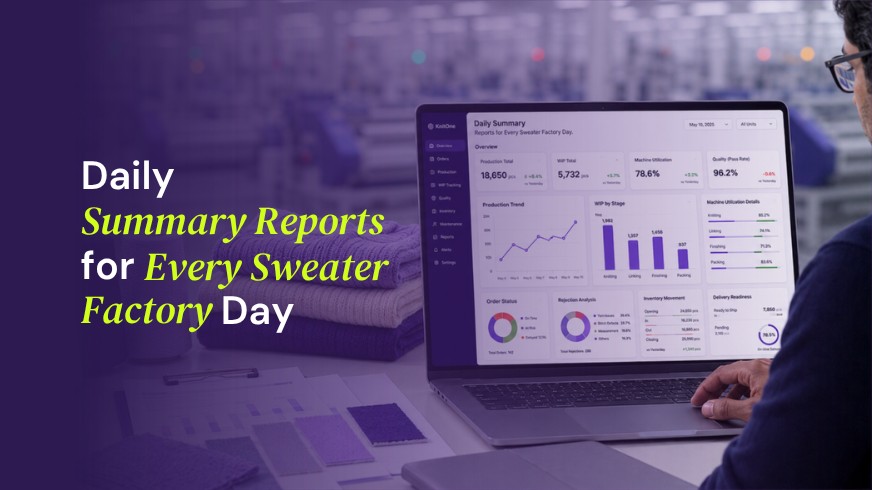
Specialized ERP software provides clear, real-time visibility into every stage of your knitwear production. It tracks and records each activity, ensuring nothing is overlooked or delayed. This transparency helps you keep orders on schedule and quickly address any issues that arise. With all data centralized, decision-making becomes faster and more informed. Ultimately, it keeps your entire operation running efficiently and smoothly.
What Makes KnitOne the Right ERP for Knitwear Manufacturers?
KnitOne is not just another ERP; it’s a tailored ERP for knitwear manufacturers, designed through extensive research into how knitwear factories truly operate. What makes KnitOne truly special is that it was developed with insights from knitwear manufacturing experts who know the real challenges on the factory floor and what solutions actually work.
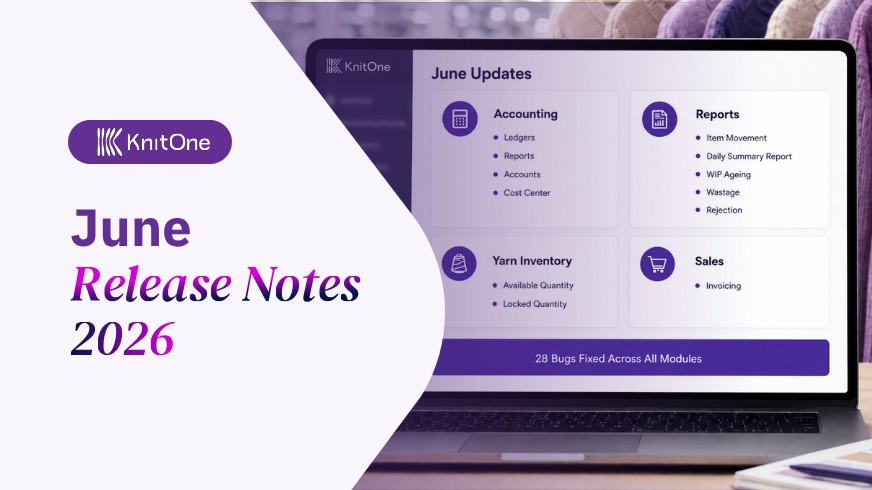
In terms of solutions, KnitOne offers a much-needed yarn inventory solution that contributes to tracking all yarn-related activities, from indent to decommission. Not just that, eCommerce integration is also possible with KnitOne, making it easier for manufacturers, buyers, and end-customers.
Final Thoughts
Choosing an ERP system isn’t just about ticking off features. It’s about finding a solution that truly understands how your business works. Generic ERPs might be fine for industries with simple, uniform processes, but knitwear manufacturing is different. It demands precision, flexibility, and deep knowledge of every stage – from yarn selection to final finishing. That’s where a specialized ERP like KnitOne makes all the difference.
KnitOne tracks every design change, production stage, and inventory detail seamlessly, giving you complete visibility and control. All in all, KnitOne is a comprehensive ERP solution for knitwear manufacturing, providing everything from yarn to growth, all in one view.
What are you waiting for? Take your next step to boost profits with KnitOne’s complete operational visibility.