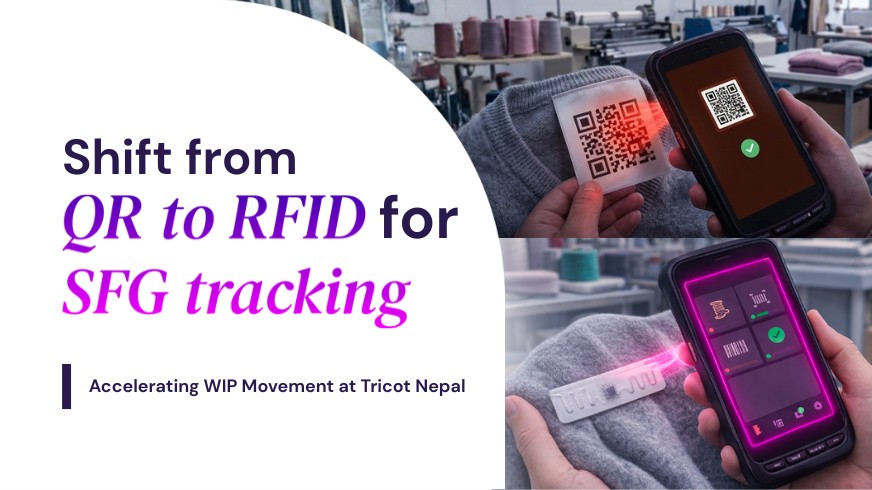

| Overview This case study examines Tricot Nepal’s transition from QR-based to RFID-based SFG tracking as part of its digital operations journey using KnitOne. It explores the limitations of QR scanning at scale, the structured approach taken to introduce RFID, and the operational improvements achieved. |
The Client
Tricot Nepal is a premium cashmere and luxury knitwear manufacturer based in Nepal, serving globally renowned fashion houses. Known for uncompromising quality standards, Tricot operates in an environment where precision, traceability, and on-time delivery are non-negotiable.

With production involving linking, polishing, finishing, and packing of client-specific panels, Tricot’s operations demand stage-wise tracking accuracy. Every panel must be traceable by order, client, and production stage to maintain quality assurance and delivery reliability.
To support this complexity, Tricot implemented KnitOne ERP as part of its digital transformation strategy—seeking not only machine-level data but also worker efficiency visibility and approval-driven workflows across departments.
During the early phase of digitization, QR code scanning emerged as the most practical tracking mechanism.
Why QR Was Chosen Initially
QR codes enabled Tricot Nepal to move away from manual registers and gain basic real-time visibility of panel movement across departments.
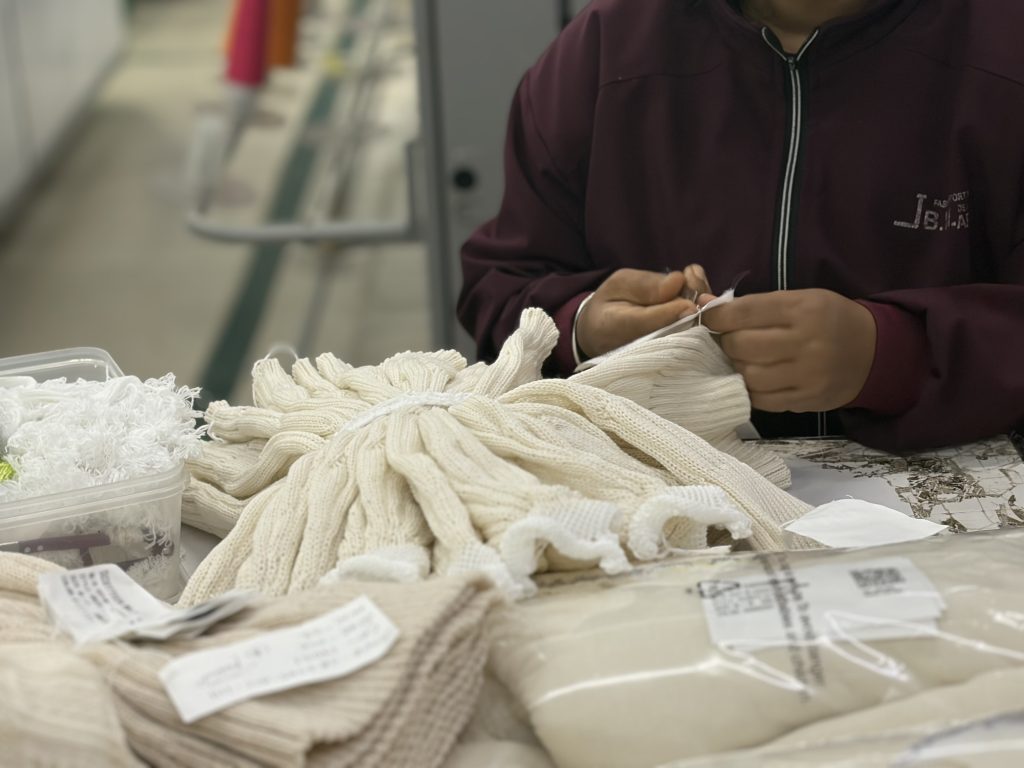
Following are the core reasons why printed QR was opted for SFG tracking at Tricot Nepal:
- Low implementation barrier
- Easy integration with existing workflows
- Clear scan → issue → transfer → approve sequence
- Suitable for item-level traceability
- Familiarity among floor operators
However, as production volumes increased and order complexity grew, the limitations of QR-based tracking became increasingly evident.
The Challenges
Three prominent challenges of using QR code for SFG tracking are explained below.
1. Material and Sustainability Wastage
Each panel or garment required a freshly printed QR label. These labels were:
- Single-use
- Non-reusable
- Discarded after processing
Over time, this resulted in:
- Continuous label consumption
- Fabric and material wastage
- Increased recurring operational cost
- Misalignment with Tricot’s sustainability commitments
In a luxury manufacturing setup, even small inefficiencies compound into significant long-term waste.
2. Dependency on Manual Scanning Discipline
QR tracking relies entirely on operator compliance. If a panel is not scanned at any stage, the system loses visibility.
This led to situations where:
- Panels moved physically but not digitally
- System status lagged behind shop-floor reality
- Supervisors had to manually verify locations
In high-throughput environments, such dependency introduces data gaps.
3. Difficulty Locating Misplaced Panels
If a panel went missing between stages and had not been scanned, the ERP could not identify its last known position.
Consequences included:
- Manual searching across departments
- YDR and production teams spending time locating single panels
- Delays in linking, finishing, or packing
- Potential order-level delays impacting delivery commitments
The effort required to locate even one missing panel disrupted downstream workflows.
Impact of the Challenges
The Solution
To overcome these challenges, Tricot chose RFID (Radio Frequency Identification) technology for panel tracking.
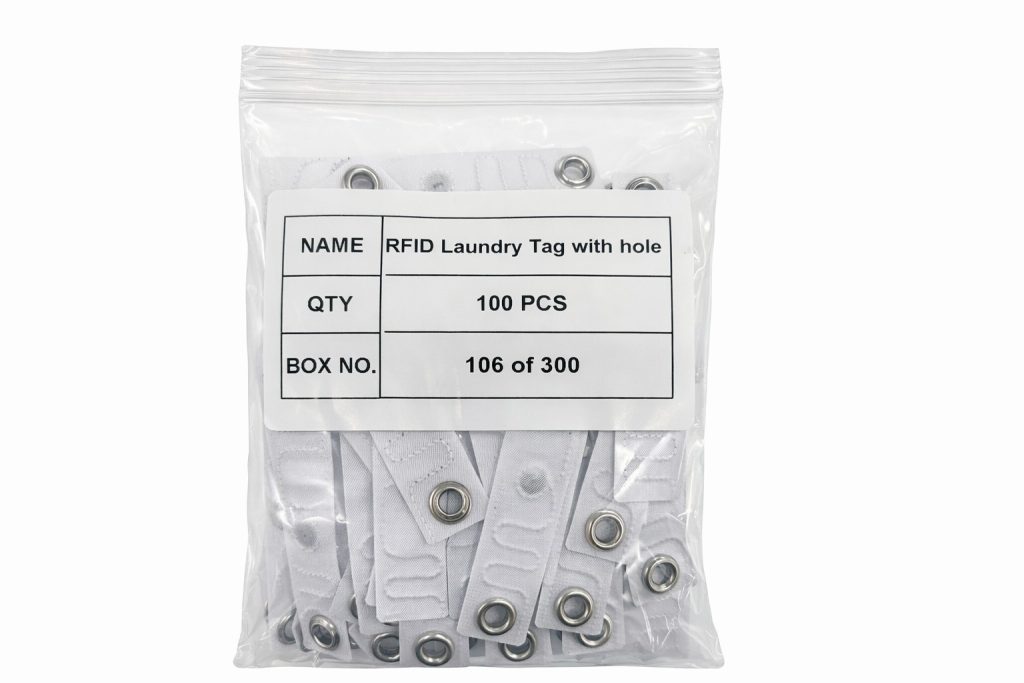
RFID Offers:
- Automatic detection without line-of-sight
- Ability to read multiple items simultaneously
- Bulk movement capture
- Durable and reusable tags
- Reduced dependence on operator action
For further information, read our blog: RFID vs QR: Which is better for SFG tracking?
Immediate Action Plan
Operators at Tricot were already accustomed to QR-based workflows built around a structured scan → issue → transfer → approve process. These approval-driven practices were deeply embedded in daily operations and accountability frameworks.
Considering the professional habit, the immediate shift from QR to RFID may create confusion. If end users are not provided with the proper training, there can be high chance of operational errors, and it could negatively impact ERP usage across the factory.
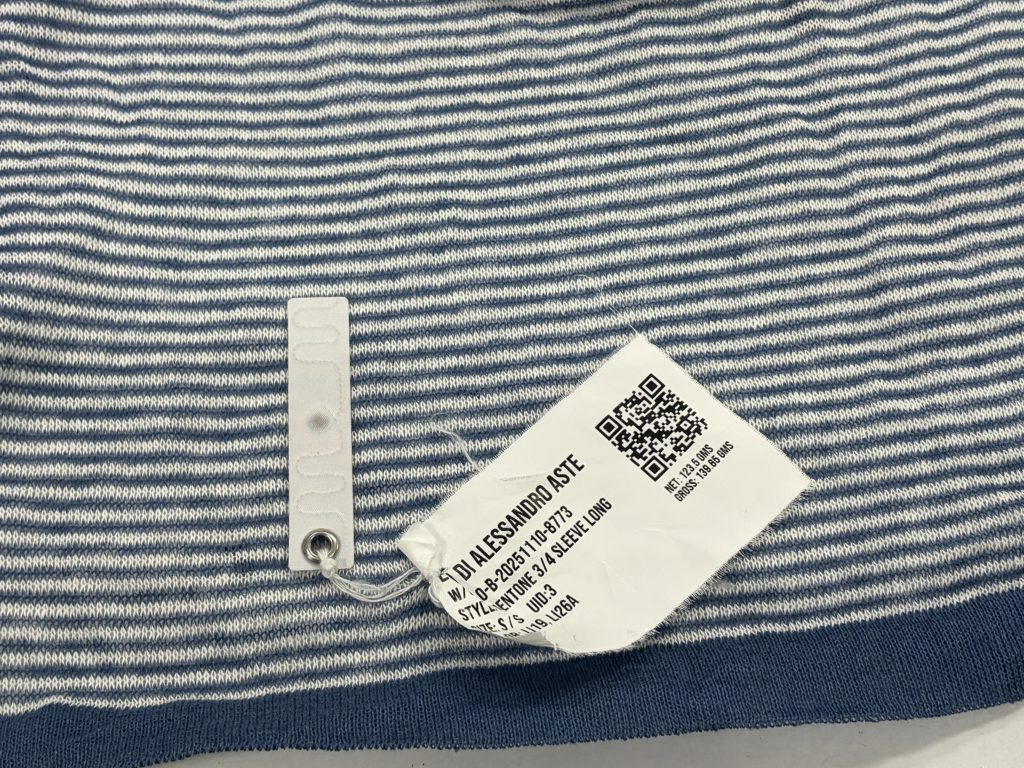
To avoid disruption, Tricot adopted a hybrid approach, using RFID tags alongside existing QR codes. This approach ensures that the visible process for operators remains unchanged.
Activities of KnitOne Support Team to Make the Shift
The transition began with a structured briefing by the KnitOne support team, introducing the shift to RFID as an enhancement to existing QR-based workflows.
A live demonstration was conducted to show shop floor workers how RFID would work within the same issue, transfer, approval, and rejection process.
Operators and Department heads were then guided on how to use the RFID tags and scanner.
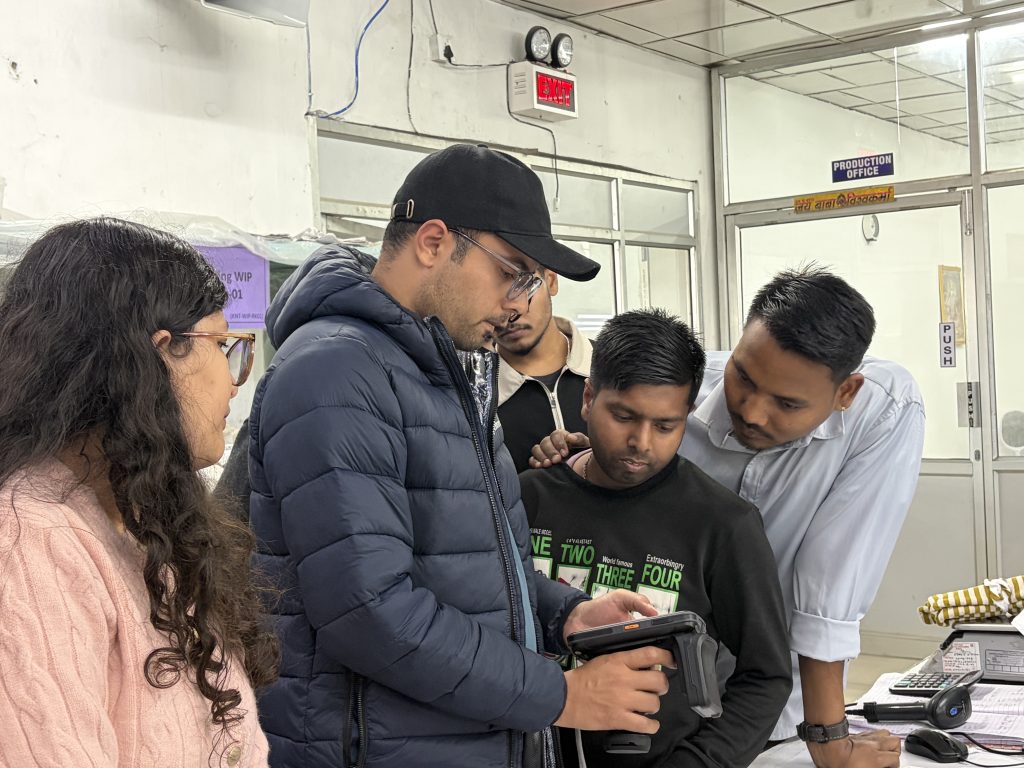
HODs from YDR, panel processing, finishing, and quality control participated in this phase, and their questions were addressed to ensure smooth coordination and approvals.
Eventually, RFID readers were installed at key points such as panel checking, inter-department transfers, and packing areas. Most importantly, utmost care was taken to avoid interference from nearby unwanted electrical equipment.
Alongside, the KnitOne system was updated to capture EPC codes along with QR references. This initial adjustment allowed panels to move into RFID tracking without changing existing processes or duplicating data.
The New Work Process: Parallel Data Capture and Validation
Running QR and RFID systems simultaneously enabled Tricot Nepal to cross-verify data integrity between the two tracking methods. Any discrepancies were identified early, helping refine reader placement and process alignment.
This parallel validation built confidence among both floor teams and management, ensuring that RFID data truly reflected physical movement before QR was phased out.
Long-term Plan and Execution
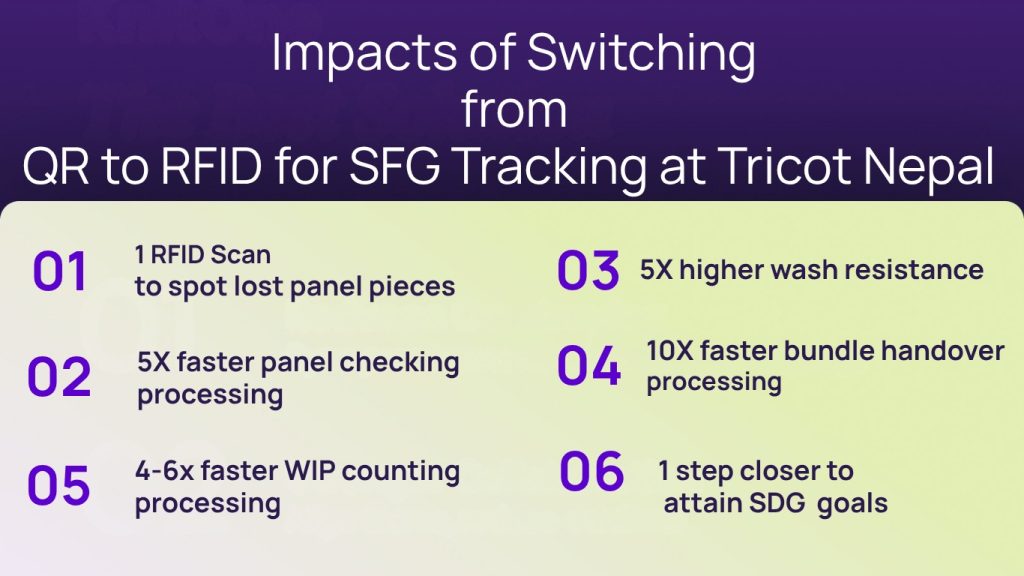
After the system stabilized and users became confident with the process, Tricot fully transitioned to RFID-only tracking for SFG movement. Unlike QR scanning, shop floor users no longer need to manually handle or align tags, as panels can be scanned automatically without physical contact. This shift brought faster panel checking, WIP counting, and bundle handover
This change brought numerous impacts to the factory, benefiting the entire production team. In the given image, you can find the notable positive effects of this transition.
Key Takeaways
Tricot Nepal, a leading cashmere knitwear manufacturer, has consistently embraced technology to strengthen production control.
By choosing KnitOne, a tailored ERP for knitwear manufacturing, Tricot gained structured visibility across its operations.
As operations scaled, QR-based SFG movement tracking began to limit speed and visibility, prompting the need for a more efficient tracking approach.
With KnitOne enabling RFID adoption, Tricot Nepal achieved 5–10 times faster bundle handovers, improved WIP accuracy, and reduced manual dependency. Reusable RFID tags also minimized tracking-related wastage, helping the factory operate more efficiently and at scale.
If you want to transform your knitwear manufacturing business from chaotic to streamlined and connected, you need KnitOne ERP.
Why wait? Take your next step to boost profits with KnitOne’s complete operational visibility.