
Tricot Nepal is one of the best sweater manufacturers in Nepal, serving international brands with a strong focus on quality and efficiency.
As its operations expanded, coordinating production, planning, costing, and inventory became more demanding. To simplify these processes, the company implemented KnitOne, a knitwear-specific ERP.
In this blog, we will look into the details of the ERP implementation journey along with the impacts it brought.
Tricot Nepal: A Brief Introduction
Tricot Nepal is a leading cashmere manufacturer under Nepal’s Golyan Group. Established in 2001, it combines decades of textile expertise with modern innovation. The company seamlessly blends traditional craftsmanship with cutting-edge technology to deliver world-class cashmere products to global fashion houses.

Renowned for its uncompromising quality standards, Tricot has cultivated enduring partnerships with international luxury brands. The company’s commitment to ethical manufacturing and sustainable practices positions it as a trusted leader in the flat-knitwear supply chain.
Tricot operates with 80 advanced STOLL knitting machines (3gg–16gg) and Rezacci Spa finishing technology, enabling a production capacity of 30,000 pieces per month. Each garment undergoes stringent quality checks to ensure it meets the highest standards before reaching customers.
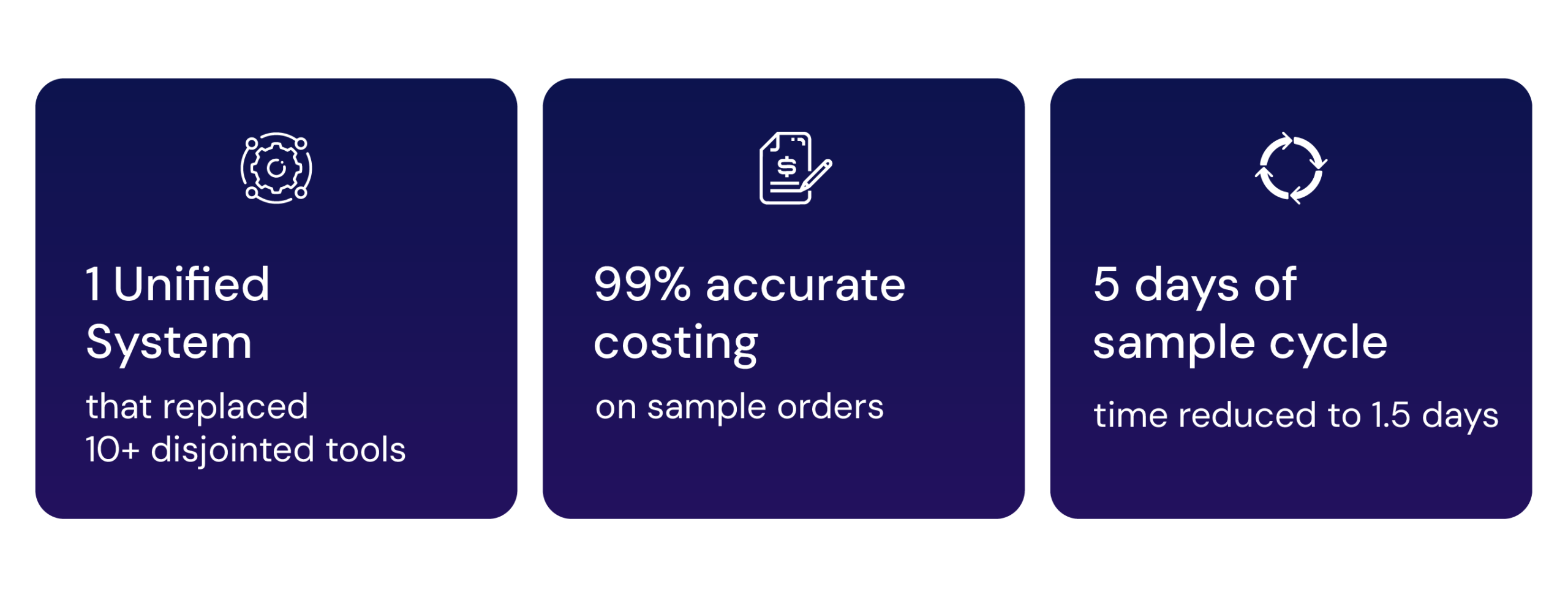
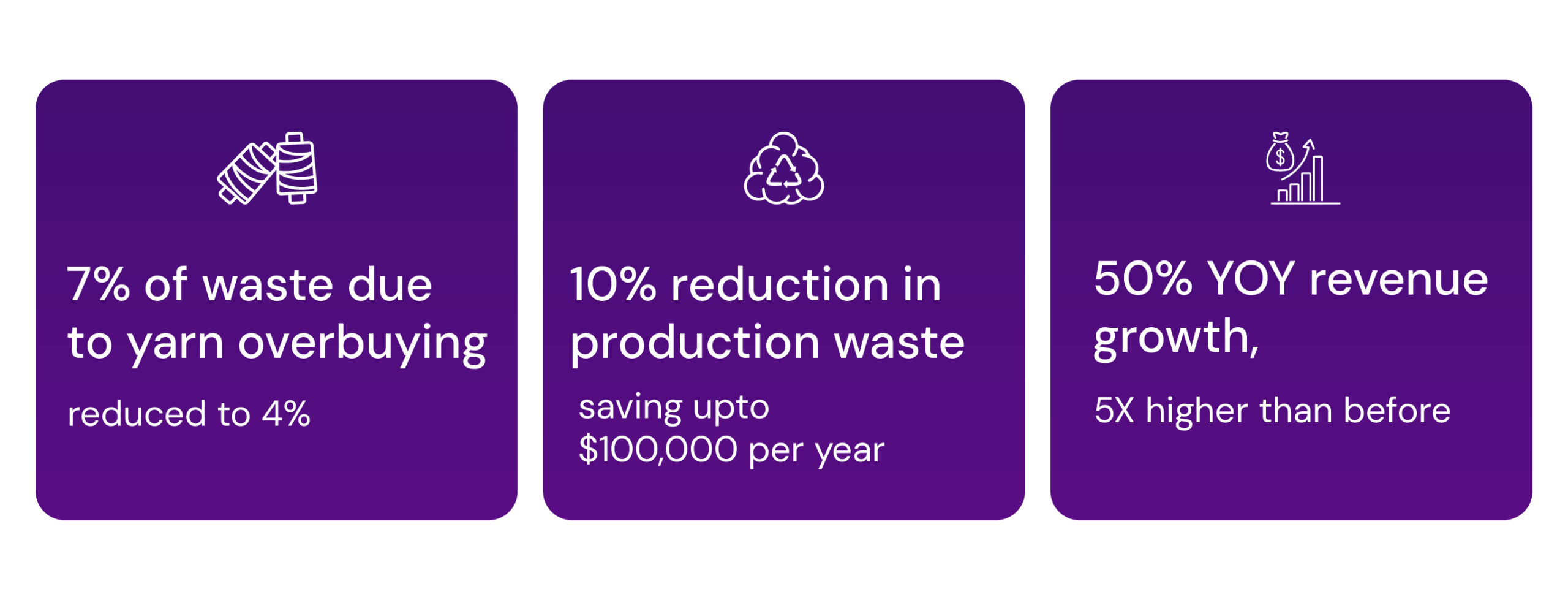
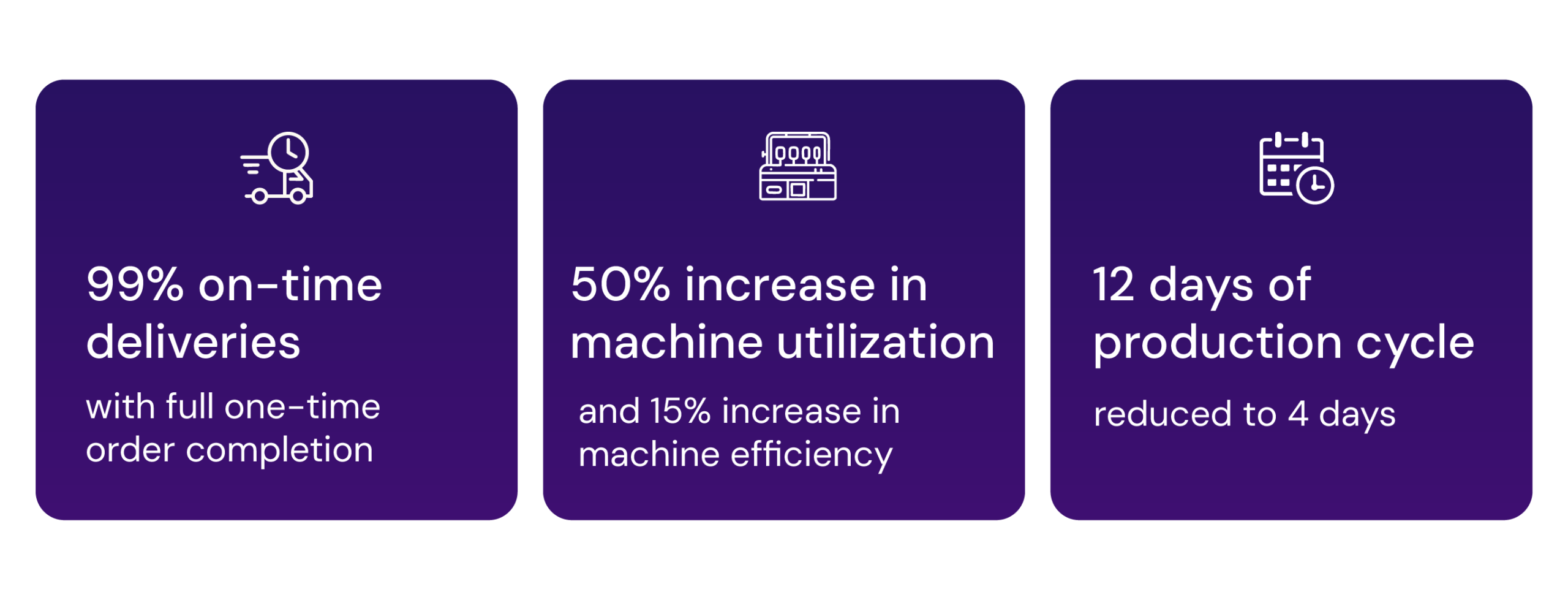
9 Major Impacts Brought by KnitOne Solutions
Challenges Faced by Tricot Nepal
- Traditional paper-based methods caused inefficiencies despite premium product quality.
- Excel-based sales and finances delayed decisions and carried a high risk of errors.
- Poor visibility, error-prone yarn tracking, and slow order updates across departments.
- No clear data on machine utilization, efficiency, and downtime.
- People’s dependencies slowed communication and led to inaccurate updates for clients.
- Lack of stage-wise monitoring for product inconsistencies.
- The entire production planning process was reactive rather than proactive.
- Scattered sales data caused costly delays.
Why Did Tricot Nepal Choose KnitOne?
Tricot Nepal is a subsidiary of Golyan Group, a diversified business conglomerate active in multiple sectors including agriculture, financial services, real estate, hospitality, renewable energy and manufacturing. The group adopted SAP to strengthen financial management across all of its business units.
However, the implementation of SAP surfaced several practical concerns. Capturing real-time data from Tricot’s factory operations proved difficult within the system. In addition, the user interface (UI/UX) was primitive, which made frequent use challenging.
Given these constraints, deploying SAP across Tricot’s factory operations appeared increasingly impractical. This led Tricot to explore alternatives that offered a closer fit to knitwear manufacturing processes. Their search ultimately brought them to KnitOne.
KnitOne is a tailored ERP for knitwear manufacturers, giving them details from yarn to growth, all in one view. It was developed by AstraSoftech to directly address the gaps in Generic ERPs. With this ERP solution, knitwear manufacturers can have granular operational control and deep financial insights that fuel growth.

Moreover, KnitOne is best for small to mid-sized knitwear manufacturers, vertical fashion brands, and designers or startups within the knitwear sector.
Solutions Provided by KnitOne
Here is a detailed overview of how KnitOne Intelligence effectively addressed the challenges faced by Tricot Nepal.
01. Automated Dashboards Replacing Excel Formulas
Tricot Nepal was already managing operations using detailed Excel sheets, but they recognized the need for a more integrated system.
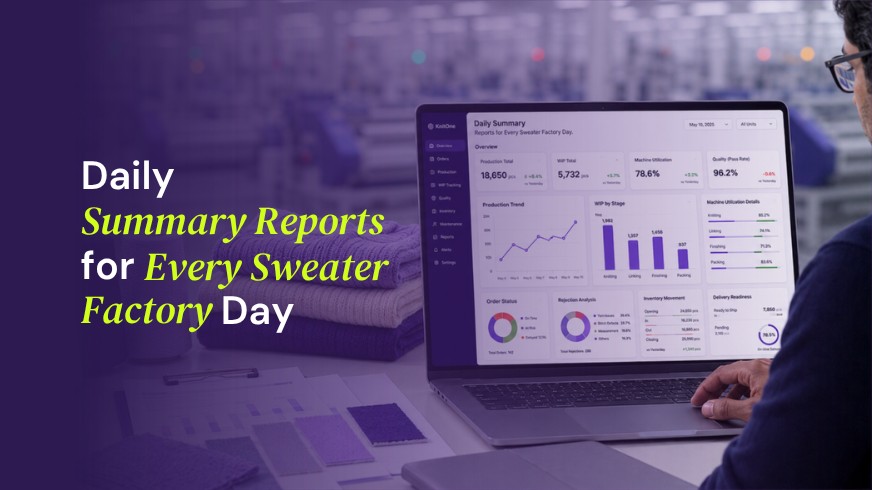
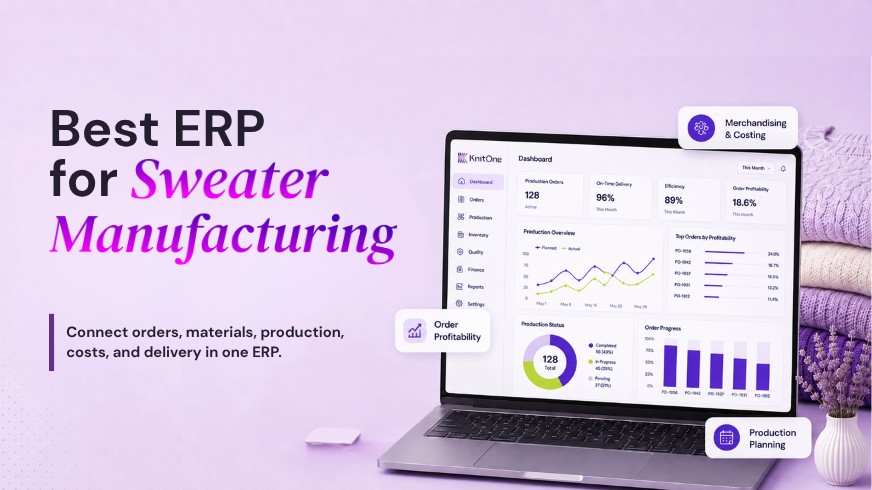
After adopting KnitOne, they gained access to automated dashboards that offered instant visibility into orders, finances, and production metrics.
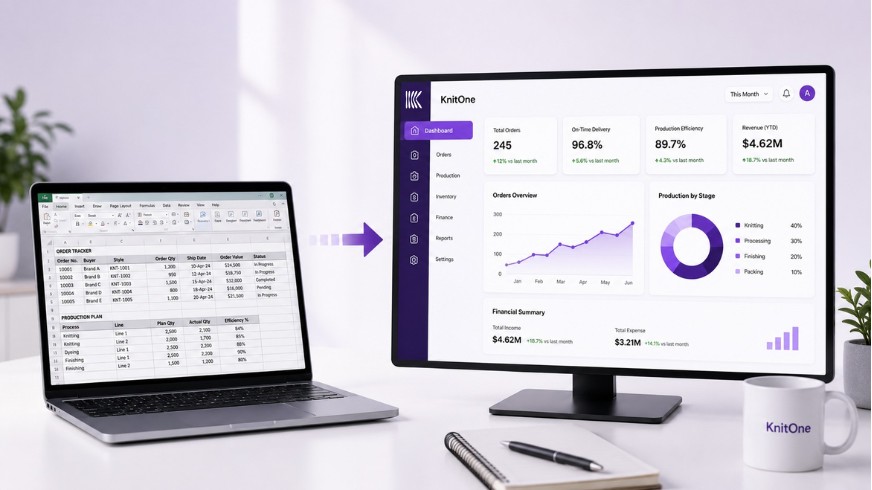
This centralized platform reduced manual tasks, saved valuable time, and enhanced decision-making. With KnitOne, Tricot has achieved clearer operational visibility, enabling simpler and more effective process management.
02. Accurate Sampling Cost Calculations Usable for Bulk Production
Merchandisers at Tricot have built strong expertise using intuition and experience, achieving accurate yarn requirement estimates. With KnitOne’s Merchandising and Costing module, they gained access to more precise yarn calculations and historical data, improving cost accuracy to 99%.
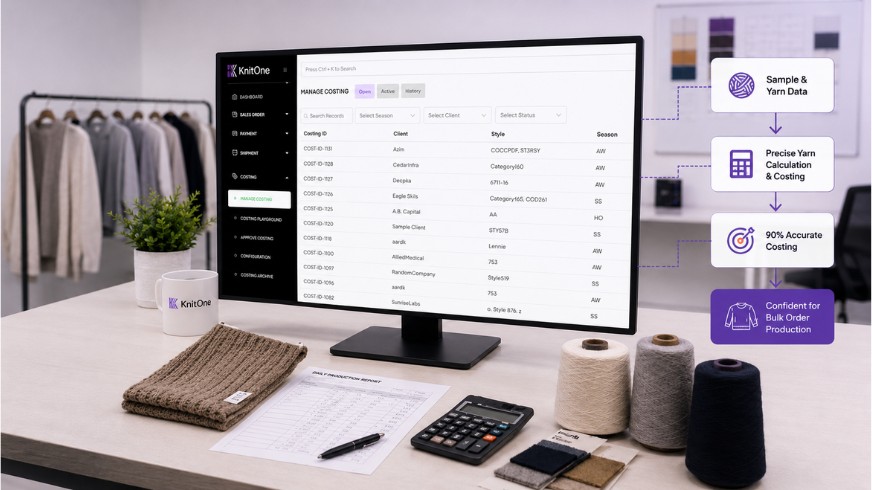
These enhancements have enabled more informed decision-making and increased merchandisers’ confidence when bidding on bulk orders.
03. Managed Yarn-Related Pre-Production Actions
Effective yarn management was always a strength for Tricot’s team, as they were experienced in handling registers and spreadsheets. But as orders grew, gaps began to appear; occasional stockouts slowed production.
KnitOne’s Yarn Inventory feature brought sharper visibility across procurement and machine issuance. Its yarn locking function shows the yarn available for new orders. With KnitOne, Tricot has strengthened yarn management and kept production flowing without a hitch.
04. Efficient Production Planning to Optimize Factory Workflow
Tricot efficiently managed production schedules to meet client demands, though occasional unplanned changes caused delivery challenges. KnitOne’s Production Planning Control (PPC) introduced a clear structure to every stage, from yarn procurement to final delivery.
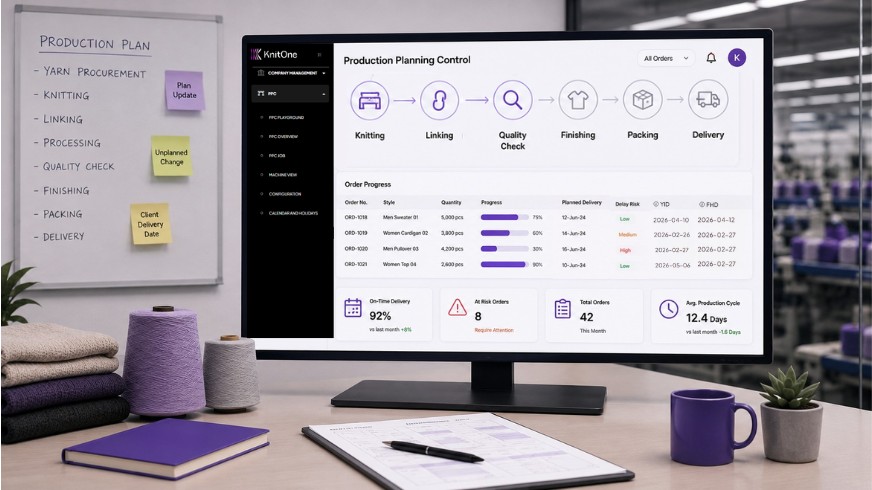
Production managers now have the ability to anticipate issues early and confidently update merchandisers and clients. As a result, workflows have become more streamlined, enabling Tricot to consistently deliver on time.
05. Detailed Analysis of Machine Usage in Factory
The operations management team at Tricot established a solid manual system to track machine usage, providing basic insights into operations. The manual process, however, limited their ability to quickly spot inefficiencies or plan maintenance proactively.
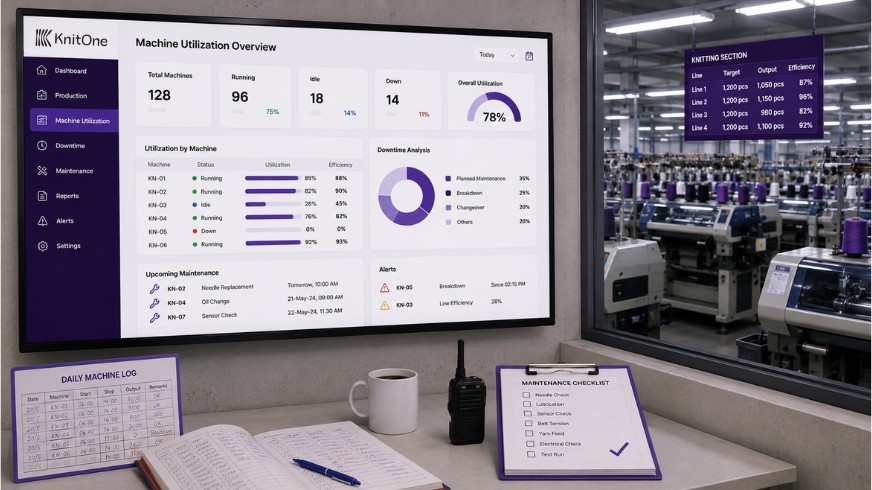
KnitOne’s Machine Utilization feature introduced comprehensive real-time tracking of machine allocation, performance, and downtime. With enhanced visibility, the team is now able to identify bottlenecks faster and schedule maintenance before issues arise.
06. Dynamic Quality Check (QC) of Items
As a reputed knitwear manufacturer in Nepal, Tricot always prioritized quality with thorough manual checks, but wanted to catch defects even earlier.
KnitOne’s Dynamic Quality Check (QC) provided them with real-time weight monitoring of semi-finished items, enabling faster and more precise defect identification.
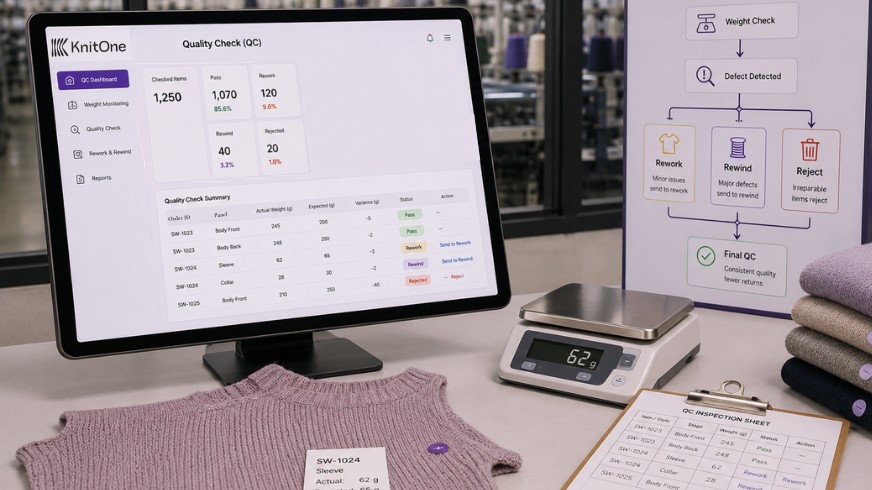
Final products with minor issues underwent rework; those with significant defects were rewound, and irreparable items were rejected. With QC, the team now ensures consistent product quality and has reduced returns for Tricot.
07. SFG (Semi-Finished Goods) Movement Tracking
Tricot’s customer service team has always ensured that clients receive timely updates. However, manual checks with production often took time and kept clients waiting.

At first, the company adopted QR codes for panel processing, although familiar with QR vs RFID and RFID being a better option.
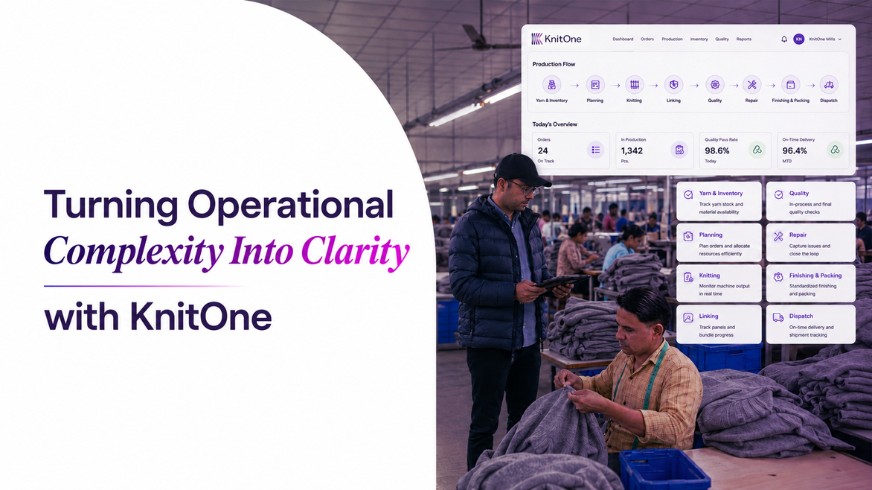
After some months, when the end-users became familiar with using QR for processing, the Tricot shifted from QR to RFID for faster and effective panel processing. The team gained real-time visibility of semi-finished goods at every stage. Updates that once took minutes are now shared with clients within seconds..
08. Organized Order-by-Order Sales Insights
The merchandising and sales teams at Tricot have always demonstrated strong expertise in managing complex expenses, commission, and payment data across multiple channels.
However, manual consolidation often slowed reporting and increased the risk of errors. With KnitOne’s Order Profitability module, the financial data began compiling automatically in real-time by order.
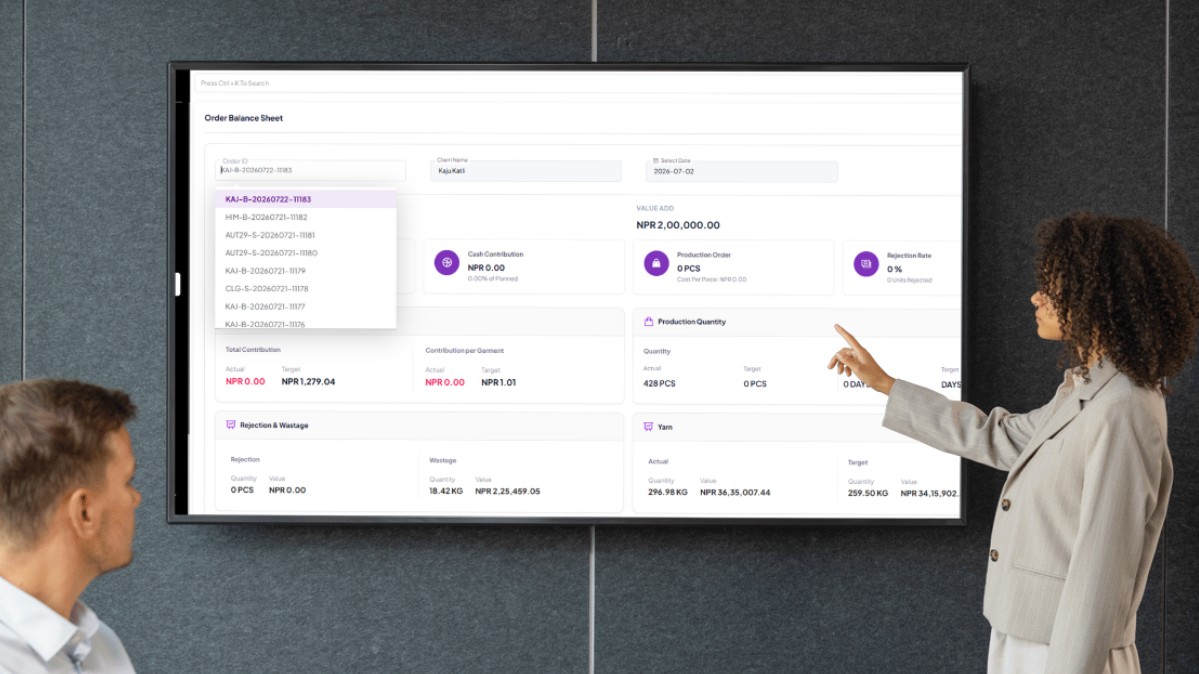
As a result, the team gained immediate, accurate insights into order performance. The key information on contributions and costs for an order is now visible within a single click.
09. KnitOne’s Wastage Tracking
The hidden key to profitability for a luxury brand like Tricot, a 3–5% yarn loss could translate into an annual cost of approximately $150,000.
While KnitOne was actively improving the order-to-production process, it also helped reduce yarn wastage.
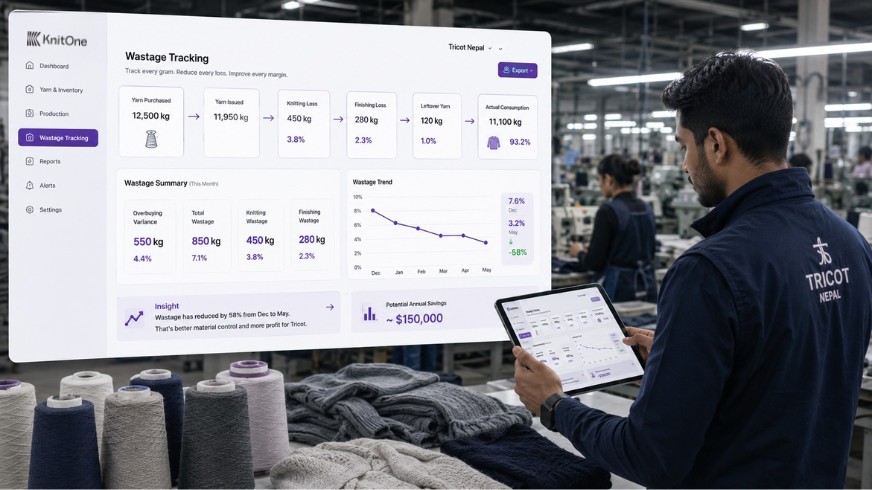
Tricot then gained clearer visibility into yarn overbuying and yarn losses during knitting, finishing, and mending stages. With these insights, they tightened control, cut waste significantly, and boosted profits.
Today, Tricot continues to leverage enhanced visibility, achieving significant cost savings and improved operational efficiency.
Key Takeaways
By adopting KnitOne, Tricot Nepal turned complex costing into faster and 99% accurate while data-driven planning improved production scheduling, machine performance, quality control, and wastage management.
Like Tricot Nepal, you’ve built your knitwear business with vision and grit. Now it’s time to run faster, smarter, and with fewer operational headaches, without changing the way you do business.
Why wait? Boost factory visibility with KnitOne’s complete operational visibility.