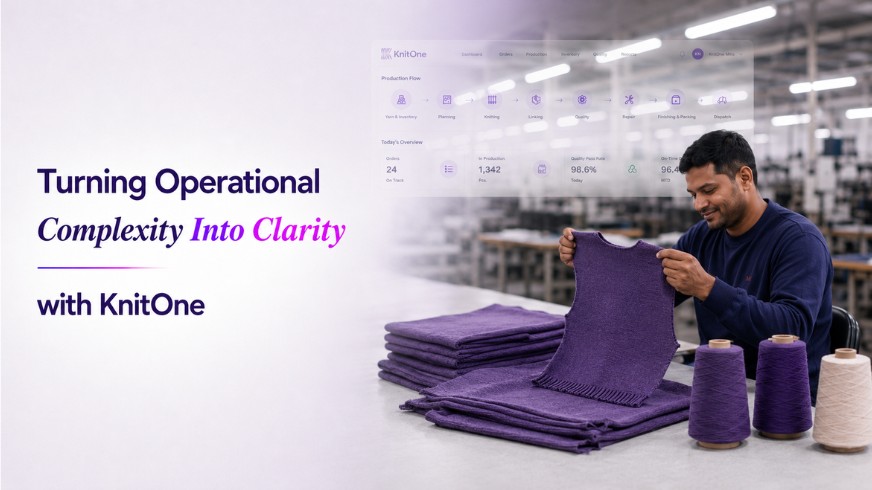

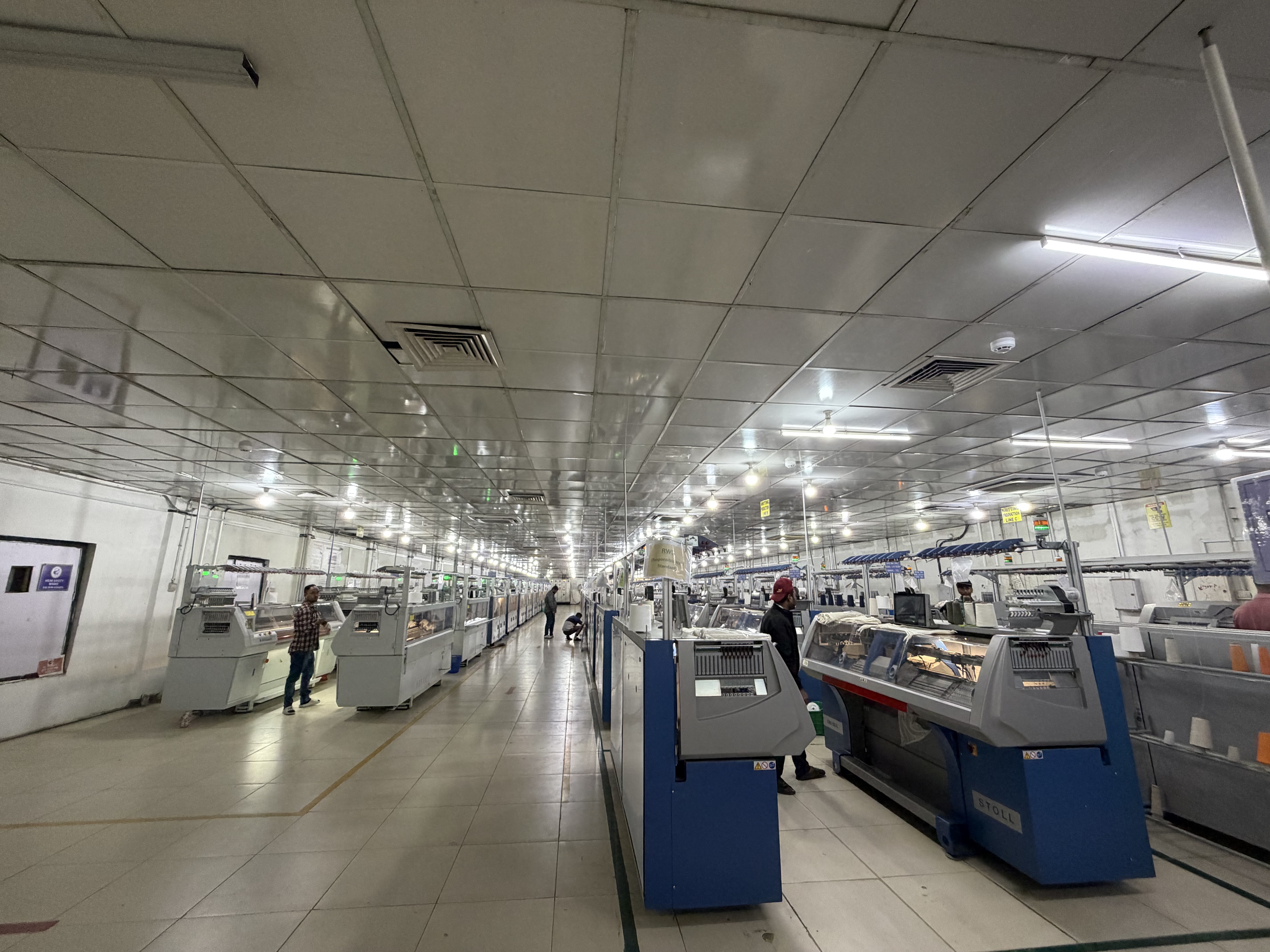
The factory is running.
Machines are loaded.
Operators are working.
Knitted panels are moving.
Bundles are stacked across the floor. The daily production report shows good output.
Yet the delivery date is getting closer, and the order is still not ready. Often, the problem is sitting in the middle of the process: Work-in-Progress, or WIP.
It is widely accepted to have some buffer between processes of WIP becoming a garment. In fact, many garment factories operate with 18–24 days of WIP, while efficient operations aim for around 4–12 days (Source). The problem begins when that buffer keeps growing.
This blog covers why WIP builds up in production, along with the practical fixes to control it.
Why WIP Keeps Building Up
WIP rarely builds up because of one big mistake. More often, it grows from small gaps between departments, machines, people, and plans.
1. Production Arrives in Batches, not a Continuous Flow
In general, WIP often builds up as the major activities like knitting and linking do not always work at the same rhythm.
Reason? Multiple knitting machines run the same style and complete their cycles around the same time. It causes a large batch of panels to reach linking together instead of flowing gradually throughout the day.
Factually, linking cannot process the entire batch immediately as linking is a skilled operation, and each panel is joined loop by loop. And the more complex the style, the longer the time for linking. This hence creates WIP.
The issue is not that knitting is producing too fast. It is a flow imbalance between two connected processes.
2. Departments Work to Their Own Numbers
It is obvious that, knitting department would look only look at its own output, so does the linking,
washing, and finishing. But the order doesn’t move according to departmental targets. It moves only when every stage is ready for the next one.
When each department works without visibility of the process before and after it, one stage may continue producing while the next stage is already overloaded. This imbalance causes work to pile up between processes and creates WIP build up.
3. Gauge Changes and Style Changes Disrupt the Flow
Every sweater style has different requirements, such as yarn, gauge, construction, and finishing.
When a new style starts, machines, operators, and processes may need adjustments before production reaches a normal flow. During this transition, one stage may slow down while the previous stage continues producing at its usual pace.
For example, knitting may complete panels, but linking may require more time because of a new construction or design detail. As work waits between processes, WIP starts building up.
4. Machine Breakdowns Don’t Stop at One Machine
Knitted panels move from knitting to inspection before entering the next production stage. However, problems during knitting can stop this movement at the very first step.
Machine setting issues, or overworked machines, can create defects such as uneven stitches. These panels cannot move forward until they are checked, corrected, or re-knitted.
As a result, unfinished panels start accumulating in the knitting area itself. Instead of flowing to the next process, production remains stuck at the source, creating WIP and delaying the overall order progress.
The Signs Business Owners Should Not Ignore
WIP problems usually become visible long before they appear in a monthly report. These are the signs you need to look for:
- Are panels piling up before one section while the next section is waiting?
- Are operators asking where the next bundle is?
- Are supervisors constantly moving bundles around to “keep everyone busy”?
- Are some departments overloaded while others have machines sitting idle?
- Are orders taking longer to complete even though daily output looks acceptable?
What Excess WIP Is Really Costing the Business
When WIP keeps increasing, more unfinished garments remain inside the factory for longer periods. And the longer unfinished garments stay inside the factory, it just brings negative impacts discussed below:
- Money remains locked in production: More unfinished garments mean more cash is tied up in inventory that cannot yet be sold or invoiced.
- Delivery timelines become longer: Slow WIP movement delays shipping and completing orders on time becomes more difficult.
- More space and handling are required: Excess WIP takes up valuable factory space and increases the effort needed for movement, tracking, and management.
- Production becomes harder to control: Too much unfinished work across departments makes it difficult to identify bottlenecks and know which orders are actually moving toward shipment.
- Factory space and resources are consumed: Excess WIP requires more storage space, handling, tracking, and movement, increasing operational effort without adding value to the product.
- Higher risk of lost panels and rework: Excess WIP increases the chance of panels being misplaced or mixed, leading to time lost in searching or re-knitting missing pieces.
Well, these were the impacts of excess WIP buildup. To avoid such circumstances at all costs, you need to find a solution to make WIP accumulation as low as possible. Let’s find those ways in the next section.
How to Reduce WIP Without Reducing Output
Higher the number of WIP, slower the delivery time. Thus, to avoid delivery delays WIP processing needs to be prompt while ensuring only high-quality materials make it to the packaging. For that, these four actions can make the biggest difference.
1. Balance Capacity Across Processes
The first step to better WIP movement is understanding how much work each department can actually handle.
Look at every stage of production: knitting, linking, mending, washing, finishing, and packing. Know their real capacity, not just the planned numbers. Then compare it with how much work is coming from the previous process.
The goal is simple: keep every process balanced, so work keeps moving instead of waiting.
2. Track Semi Finished Goods (SFG) at Every Stage
The journey from knit panel to Finished good/garment is long. Thus, these panels moving from one stage to another needs to be tracked, especially about:
- How many panels were made?
- Where has it been sitting?
- How long has the WIP been sitting on one stage?
Data and insights on these questions improve WIP visibility and helps the immediate professional to act for faster processing.
3. Reduce WIP Ageing
The number of WIP production isn’t an issue, but when these WIP stay within one stage for more than two days, it can become a serious problem.
That is why WIP should be looked at through both quantity and age.
Also, your focus should be on maintaining the acceptable WIP ageing and movement.
4. Make Decisions from One View of Production
WIP becomes difficult to control when every department has a different version of the truth.
To solve that, connected production is required. Such view gives management a clearer picture of:
- what has been produced
- what is currently in each stage
- what is waiting,
- where the flow is slowing down.
That makes it possible to act before a small backlog becomes a delivery problem.
How KnitOne Helps in Reduce Unnecessary WIP Movement
KnitOne- a tailored ERP for knitwear manufacturers via its KnitOne Intelligence can solve the knitwear production related issues with production visibility, from yarn to garment.
KnitOne has dedicated modules that help reduce the WIP build up. Here’s how it does that:
- Make highly productive sweater production planning with Production Planning and Control. It helps plan machine capacity and workforce productivity.
- QR or RFID-based SFG tracking for faster and chaos-free panel and WIP processing.
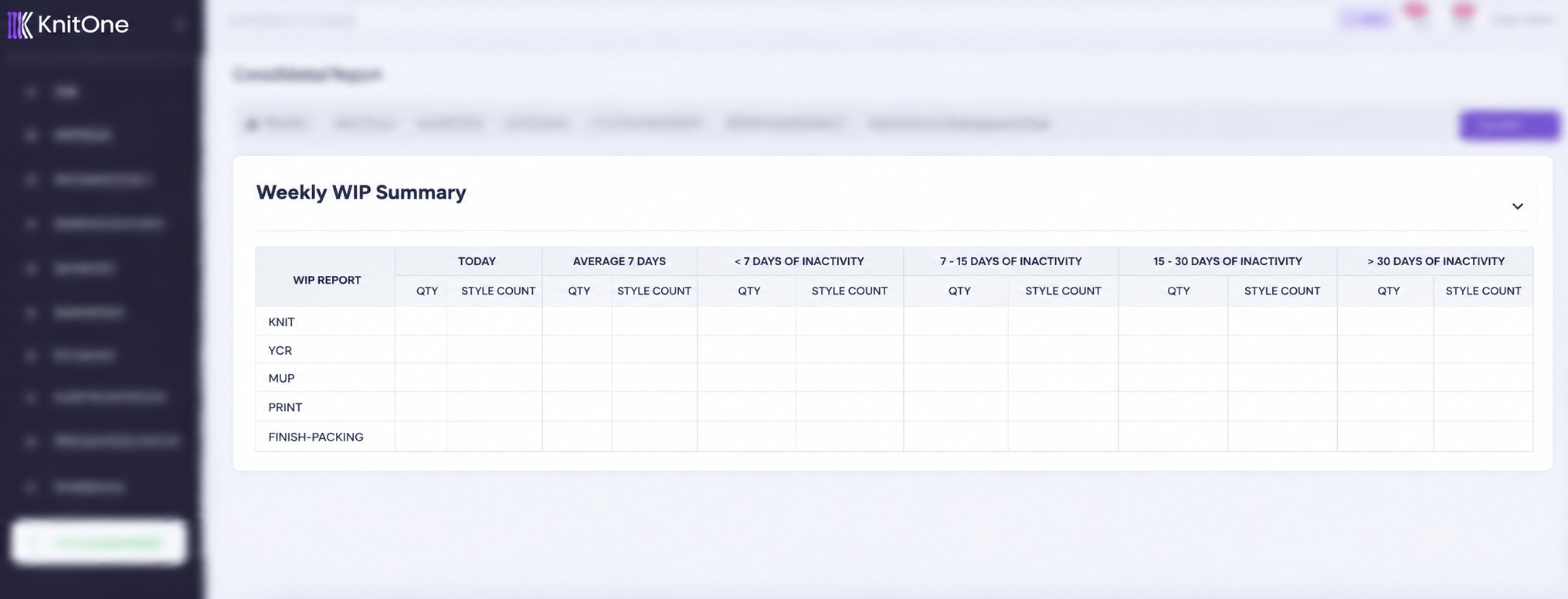
- Detailed production reports including WIP reports. The data and insights are more about WIP ageing and movement
Final Thoughts: A Busy Floor Is Not the Goal
A factory can look productive from outside. Machines can be running, operators can be working, and production reports can show strong output. But if work-in-progress continues to increase, shipping and sales can still suffer.
A factory cannot operate without WIP; thus, having a certain level of unfinished production is necessary to keep processes connected. The problem begins when WIP grows beyond a manageable level and starts affecting production flow, shipment timelines, working capital, and overall business performance.
Thus, factory owners’ goal should be to keep work-in-progress ( WIP) controlled and moving. And KnitOne makes this possible via its dedicated modules and reporting.
Why wait? Boost profits with KnitOne’s complete operational visibility.
Frequently Asked Questions
What is WIP in sweater manufacturing?
WIP (Work-in-Progress) are the unfinished garments or panels that are still moving through production stages such as knitting, linking, washing, finishing, and quality checking before becoming Finished Garment.
When does WIP build up in sweater factories?
WIP builds up when one production stage cannot keep up with the next, due to capacity gaps, process delays, style changes, machine issues, or poor production flow visibility.
Is having WIP in a factory a problem?
No. A certain level of WIP is necessary to keep production running. The problem starts when WIP grows beyond a manageable level and affects delivery, working capital, and production control.
How can factories reduce WIP?
Factories can reduce WIP by:
- balancing production capacity
- tracking work at each stage
- identifying bottlenecks early
- ensuring all departments work with the same production visibility.
How does KnitOne help control WIP?
KnitOne helps factories control WIP by: connecting production planning, SFG tracking, and production reporting on one platform.
It helps teams monitor production movement across stages, identify where WIP is building or ageing, and take timely action to keep orders moving toward completion.